

Michael
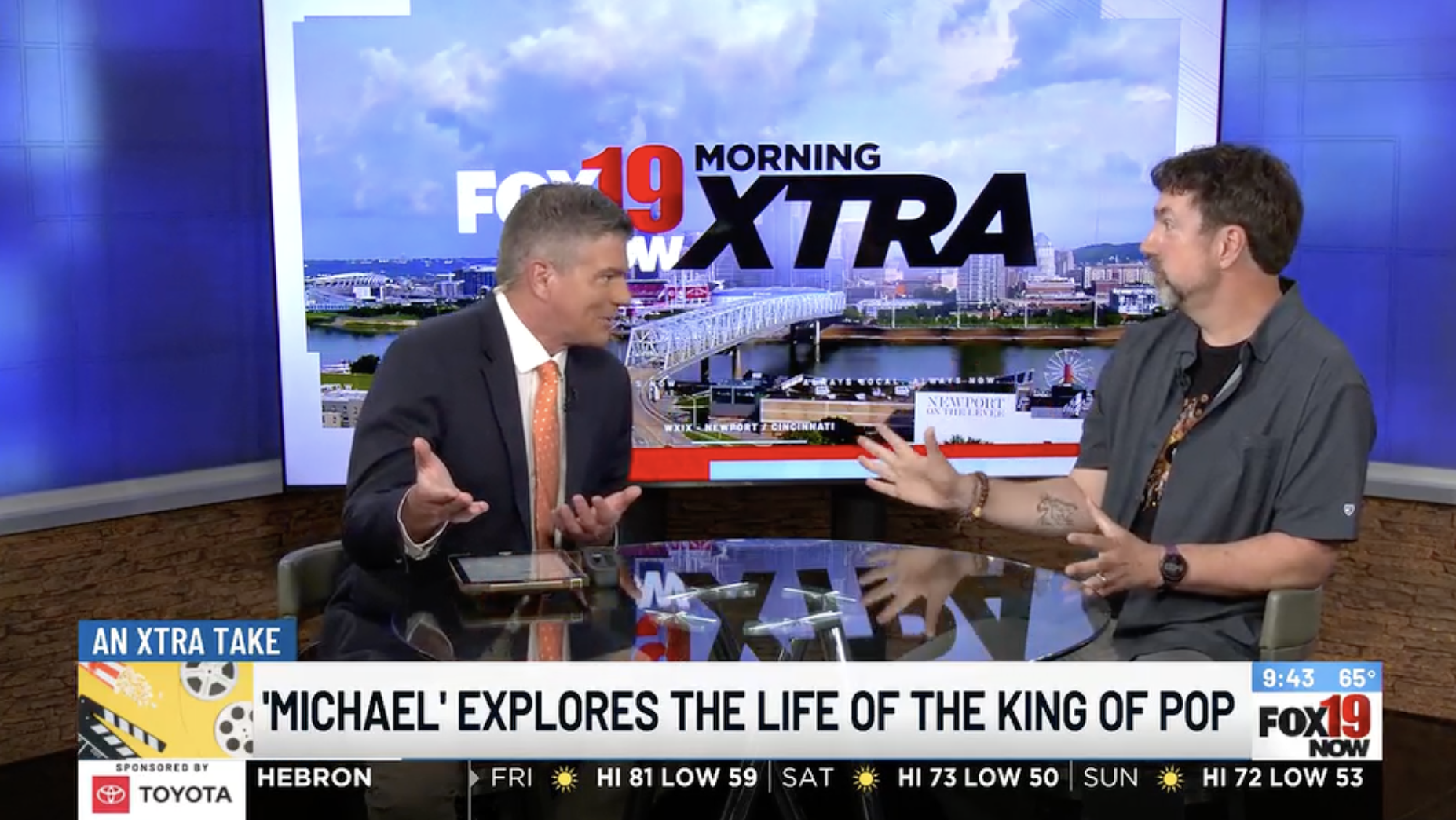
Click the pic for my FOX19 Morning Extra appearance!
The story of the famous musician Michael Jackson (Juliano Valdi and Jafar Jackson), known as the King of Pop.
STORY: D
So close, yet so far away.
The film is much more interested in his life on-stage than off of it. The concert scenes are intricately re-created and filled with extraordinary intensity. They’re thrilling, but our familiarity keeps us from getting any closer to knowing the man.
Our chance to get closer to him comes in the off-stage moments, and that’s where the film’s energy fizzles. Most of these scenes (with the exception of some incredibly powerful moments in his youth) are steeped in Jackson speaking in trite platitudes while everyone nearby looks upon him with a messiah-like reverence. The scenes are surface-level and soulless.
Perhaps Michael was never more alive than when he’s on stage. That’s fair. But the vast gulf in emotional resonance between the on-stage and off-stage scenes makes this movie nothing more than a safe, Jackson-worshipping jukebox musical.
PEOPLE: A-
Jafar Jackson and Juliano Valdi transform into the legend.
While I was fully aware I wasn’t watching the real Michael Jackson, there were times I actually believed it was him strutting and moonwalking across the stage. Jafar’s performance is more channeling than imitation. It’s mesmerizing.
Valdi’s performance may even be better. The 12-year-old leans more into imitation than Jafar, but the script also gives him more dramatic work to do. As his angry, demanding father takes off his belt, Valdi’s eyes simultaneously convey fear and reverence. Remarkable moments like that one work to get the film off to a strong start.
As far as the other actors, Colman Domingo and Nia Long are wonderful as Michael’s parents. And if the Oscars add a “Best Cameo” category this year, Mike Myers is the early odds-on favorite to win it.
FILM NERD STUFF: D
Don’t tell me how to feel.
Whenever Michael does something nice for a child, there’s someone off to the side looking on with teary eyes, moved by Michael’s too-big-for-this-world heart. Whenever the camera cuts to the crowd at his concerts, the audience members appear to be in a state of mystical, ravenous ecstasy (or perhaps literal ecstasy).
These are reactionary characters — figures whose purpose is to signal to the audience how we should feel about what we’re seeing. The movie’s overreliance on them reveals a lack of faith from the filmmakers, as if we can’t be trusted to make up our own minds about how we feel about Michael Jackson.
ONE BIG LESSON: D
What you don’t say can speak the loudest.
Michael’s home is filled with snakes, giraffes, and chimpanzees, but the film never even glances at the elephant in the room: the multiple accusations of child abuse.
The original cut of this film addressed them. The footage was taken out in post-production due to a lawyer’s late catch of a settlement clause that prohibits any depiction of one of the accusers. Reshoots and many edits were required to create the current film.
It’s fascinating to ponder what that first cut must have been like. How did a movie that (in theory at least) meets these allegations head-on transform into a propaganda film designed to sanitize Michael’s image? Both the filmmakers and the audience are aware of these terrible accusations, so een through their omission they are undeniably present in the film. As David Lynch might say, by leaving them out we wind up looking more at the hole than the donut.
How would the two elements work together in the same film? Perhaps we’ll get a glimpse in the sequel.
FINAL COMMENTS:
Whether we should separate art from its artist is an age-old, thorny question. How do you answer it?
You’ll interact with this film the same way you interact with Michael today. Have you long canceled him due to the accusations, or do you still bop your head and turn up the volume every time you hear that “Billie Jean” bass line? There’s no correct or simple answer. But the way you answer will be the deciding factor as to whether you find this a biased and superficial film or you leap up in your seat and start singing with joy.
The film, tapping its toes and air-guitaring to “Beat It,” clearly knows which side of the argument it’s dancing to.