

Send Help
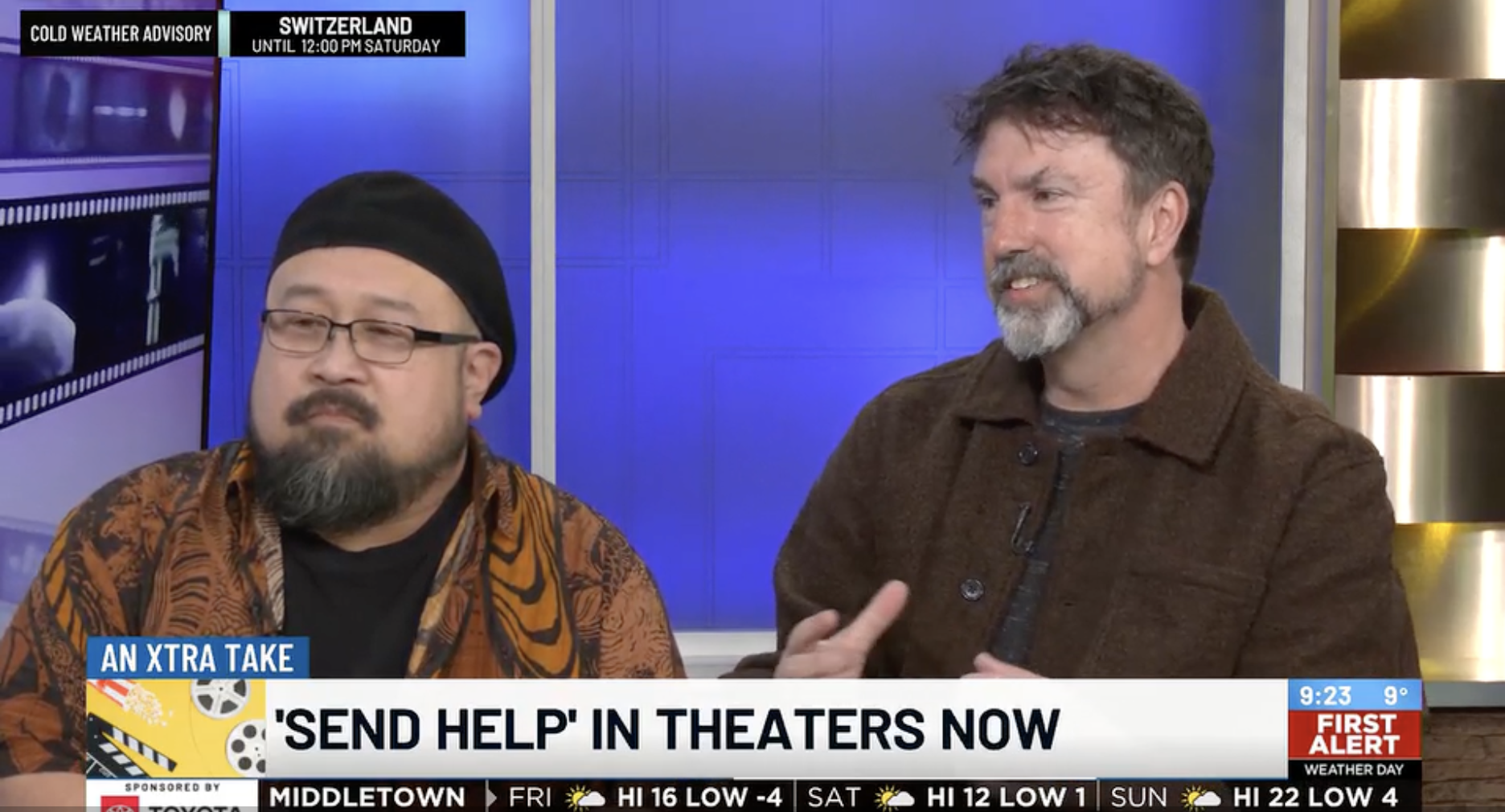
Click the pic to watch our FOX19 Morning Extra review of Send Help!!!
Scroll down for my full Report Card Review!
An employee (Rachel McAdams) and her insufferable boss (Dylan O’Brien) become stranded on a deserted island, the only survivors of a plane crash. Here, they must overcome past grievances and work together to survive. Will they make it out alive?
STORY: C
Raimi’s tone makes these tropes feel fresh.
While the film was in development, it was referred to as “Misery meets Cast Away.” The idea may come across as original, but for the most part this is stuff we’ve seen before.
What fills the film with freshness is Raimi’s trademark tone. Send Help is not here to terrify you; it only wants to entertain you. You may twist away in disgust at times, but even as you squirm, you’ll be smiling.
PEOPLE: B
McAdams and O’Brien carry the weight.
Both lead parts are meant to be caricatures. O’Brien’s Bradley is a menacing buffoon. He takes every terrible thing every terrible boss has ever done and conjures pure evil. We regard him as a stereotype, not an actual human being. That’s exactly who Raimi wants him to be.
Yet while Rachel McAdams plays a typical, underappreciated employee who can’t stand up for herself, we believe she feels like a real human being. Maybe that’s due to the film’s sympathetic point of view. But I believe it’s due more to her otherworldly acting ability.
FILM NERD STUFF: B-
Lookee here.
The camera is always moving with deep intention. Look up! Look down! We bounce from sweeping panoramics, to wide shots, and then to close ups.
The camera constantly siezes hold of your head, dragging your eyes where it wants you to look. It’s an active storyteller, contributing just as much to the tone as the practical effects and acting choices.
ONE BIG LESSON: D
Help isn’t coming.
Whether it’s in the boardroom or on the beach, no one will ever care about your life or well-being as much as you do. Waiting for an angel or a unicorn to lift you up and away is rarely the best survival strategy.
The great part is that the more you work toward creating the life you want, the more often people will appear to help you on your way.
(It’s a very useful lesson, but the grade is low because the film doesn’t seem interested in voicing it.)
FINAL COMMENTS:
We saw this exact plot play out four years ago in the third act of Ruben Östlund’s fantastic Triangle of Sadness. Östlund squeezes every drop of social commentary that he can from it.
Sam Raimi squeezes nothing. Audiences will find themselves thinking about themes of capitalism and the workplace solely because the scenario itself invites them to. Raimi’s only interest is to make sure you have a fun time. Poking around for any social commentary is left to you, if you so choose.
This one’s for the popcorn eaters. Make sure you grab some.